Is This Deal Worth It? The Complete Guide to Never Overpaying Again
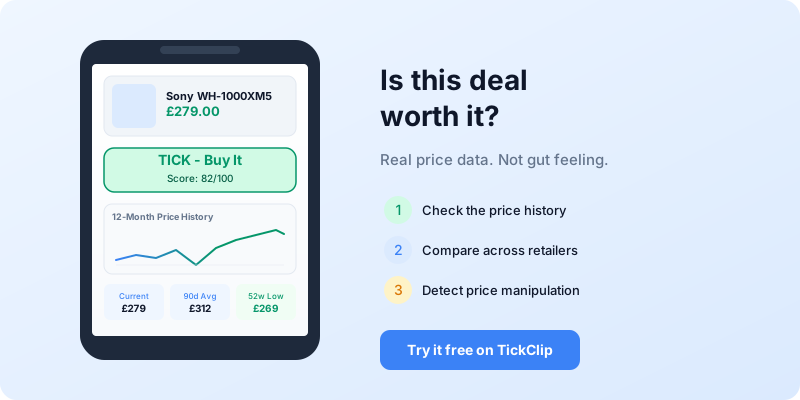
You know that feeling. You’re scrolling through Amazon at midnight, you spot something with a fat red “SALE” badge, and your brain goes: oh, that’s a bargain. Your thumb starts drifting toward the buy button.
Stop. Take a breath. And ask yourself one question:
Is this deal actually worth it?
Not “does it look like a deal?” Not “did someone on Instagram say it’s a deal?” But genuinely — based on actual price data — is this a good time to buy this thing?
That one question has saved us (and tens of thousands of shoppers like us) hundreds of pounds a year. And in this guide, we’re going to show you exactly how to answer it — quickly, with data, every single time.
No fluff, no affiliate-bait listicles. Just the real tools, tricks, and frameworks that actually work.
Let’s get into it.
First up: why most “deals” aren’t deals at all
Here’s something that might sting a little: the majority of deals you see online are manufactured. Not all of them, obviously — genuine deals absolutely exist. But the pricing tricks retailers use are so widespread that in 2023, Which? found 98% of Black Friday “deals” had been the same price or cheaper in the six months before the sale.
Ninety-eight percent. Let that sink in.
The question isn’t whether retailers do this — it’s how they do it. And once you see it, you can’t un-see it.
The pre-sale price hike
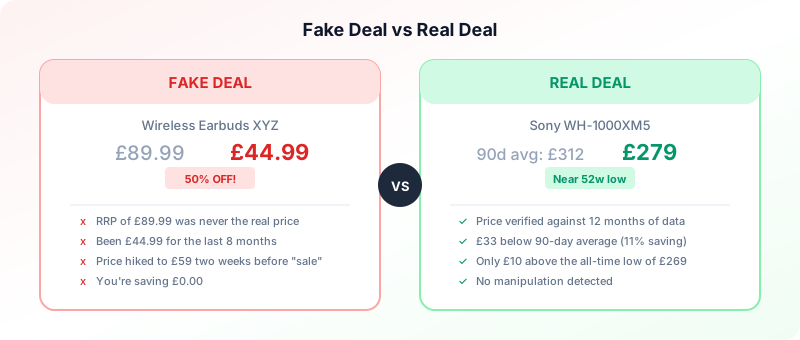
This one’s a classic. A product sits at £40 for months. Then, a few weeks before Black Friday, it creeps up to £58. On the day itself, it goes “on sale” for £39. Amazing — 33% off!
Except… it’s basically the same price it’s been all year. You’re “saving” £19 compared to a price that only existed for two weeks specifically to make this moment feel like a win.
The phantom RRP
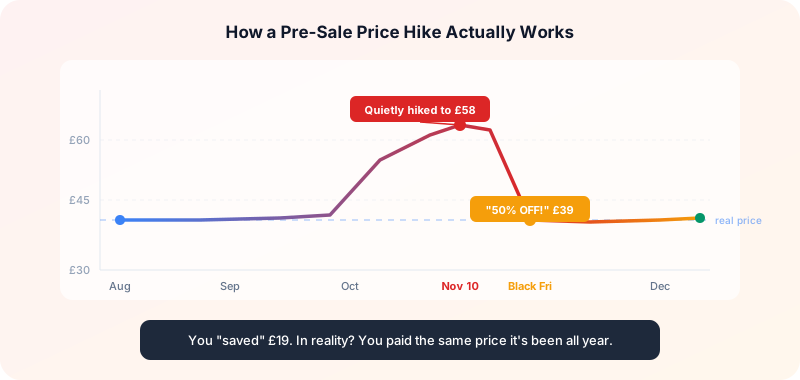
You see “Was £79.99, Now £39.99” — but the product was never actually sold for £79.99. Or it was, briefly, when it first launched and nobody bought it. It’s been £39.99 for the last nine months. The crossed-out price is there purely to make you feel clever.
The Competition and Markets Authority (CMA) has guidelines against this, but enforcement is slow and retailers know it.
The permanent “sale”
Some products are literally always on sale. The deal badge rotates on and off every couple of weeks — just enough to make each “sale” technically legal. If you check the price history, you’ll see a flat line with tiny spikes. Those spikes? The brief “full price” windows that exist solely to justify the next “discount.”
Shrinkflation (the sneaky one)
Price stays the same. Box looks the same. But you’re getting less. Smaller pack sizes, fewer included accessories, a cheaper component swapped in. The price per unit goes up, but nothing on the page tells you that. This is the one that’s hardest to catch without doing your homework.
The fix: Always check the price history before buying anything on “sale.” If the price was the same or lower three months ago, it’s not a real deal — it’s theatre.
The dirty playbook: what dishonest sellers and retailers actually do
Pricing tricks are just the start. Beyond fake discounts, there’s a whole playbook of shady tactics that sellers and retailers use to separate you from your money. Some of these are technically legal. Some aren’t. All of them are designed to exploit the fact that most shoppers are too busy (or too trusting) to look closely.
Fake reviews — the 5-star illusion
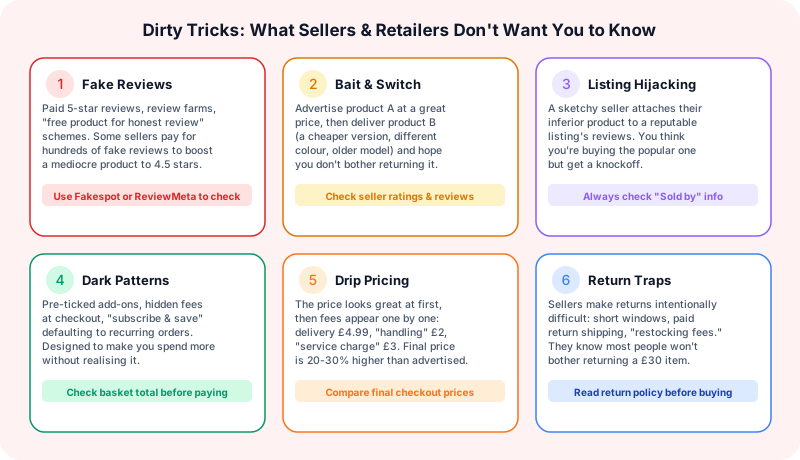
This is massive, especially on Amazon. Sellers pay for fake reviews, run “free product for honest review” campaigns (where “honest” means “5 stars or we cut you off”), and even use AI to generate hundreds of believable-sounding reviews overnight. A 2021 study found that around 42% of Amazon reviews showed signs of being fake or incentivised.
Red flags to watch for: lots of reviews posted on the same day, reviewers who only review products from one brand, generic-sounding reviews with no specific details, and suspiciously perfect ratings on no-name brands.
Use tools like Fakespot or ReviewMeta to analyse review quality before trusting them.
Bait and switch
They advertise Product A at a cracking price. You click, you buy, you wait. What arrives is Product B — a cheaper version, different colour, older model, or sometimes a completely different brand. The bet is that you’ll be too lazy to return it, especially if it’s “close enough.” This is particularly rampant with third-party sellers on Amazon and eBay.
Listing hijacking
A dodgy seller attaches their inferior product to a well-reviewed listing. You see 2,000 glowing reviews and think you’re buying the popular version — but the “buy now” button is actually going to a knockoff seller who’s piggybacking on someone else’s reputation. Always check the “Sold by” and “Dispatched by” info.
Dark patterns at checkout
Pre-ticked insurance boxes. “Add protection plan” buttons that are bigger and more colourful than the “no thanks” link. Subscribe-and-save that quietly defaults you to recurring orders. Hidden delivery charges that only appear at the last step. These aren’t accidents — they’re carefully designed to make you spend more without consciously deciding to.
Drip pricing
The headline price looks brilliant — until fees start appearing during checkout. Delivery: £4.99. “Handling”: £2. “Service charge”: £3. Suddenly the £29.99 product costs £39.98 and you’re already 4 clicks deep. Airlines, event ticket sellers, and some electronics retailers are notorious for this.
The return trap
Some sellers deliberately make returns painful. Tiny return windows (7 days instead of 30). Requiring you to pay for return shipping. “Restocking fees” of 15-25%. Making you print a label, take it to a specific courier, and wait 6-8 weeks for a refund. They know that for anything under about £30, most people just won’t bother. Free money for them.
Pro tip: Before buying from an unfamiliar seller, check their return policy. If it’s vague, punitive, or hard to find — that tells you everything you need to know.

The 60-second deal check
Alright, enough doom and gloom. Here’s the good news: spotting fake deals is surprisingly easy once you know what to look for. We use a simple 5-point check that takes about a minute. Do this before every non-trivial purchase and you’ll dodge 90% of pricing tricks.
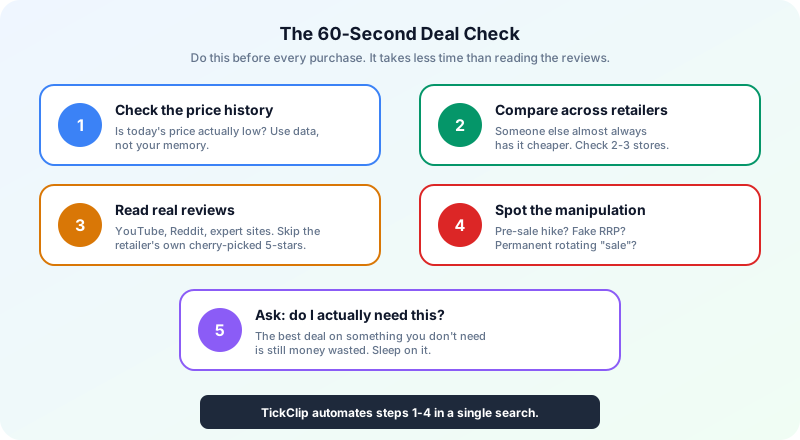
Let’s break each one down.
1. Check the price history
This is the big one. Don’t trust your memory of what something “used to cost” — your brain is terrible at that. Pull up the actual price chart. Is today’s price near the 52-week low? Below the 90-day average? Or is it just… normal?
Price trackers exist specifically for this (we’ll list the best ones later). Use them. Every time.
2. Compare across retailers
Just because it’s on sale at one store doesn’t mean it’s the cheapest there. Spend 30 seconds checking Google Shopping, Idealo, or PriceSpy. You’d be surprised how often a “deal” at one retailer is just the regular price somewhere else.
3. Read real reviews
Not the ones on the product page — those are curated. Hit YouTube, Reddit, or expert review sites. If the product is genuinely rubbish, it doesn’t matter how cheap it is.
4. Check for manipulation
Was the price hiked before this “sale”? Has it been on “deal” permanently? Is the crossed-out price actually real? This is where price history data is your best friend.
5. Ask yourself: do I actually need this?
Be honest. If you didn’t know about this deal an hour ago, and you weren’t already planning to buy this product, maybe you don’t need it. A 40% discount on something you’ll never use is not saving money. It’s spending money you wouldn’t have spent.
Your brain vs. the buy button
OK, here’s the uncomfortable bit. Even if you know how pricing tricks work, your brain still falls for them. That’s not a character flaw — it’s literally how human psychology works. Retailers hire teams of people whose entire job is to exploit these biases. So let’s name them.
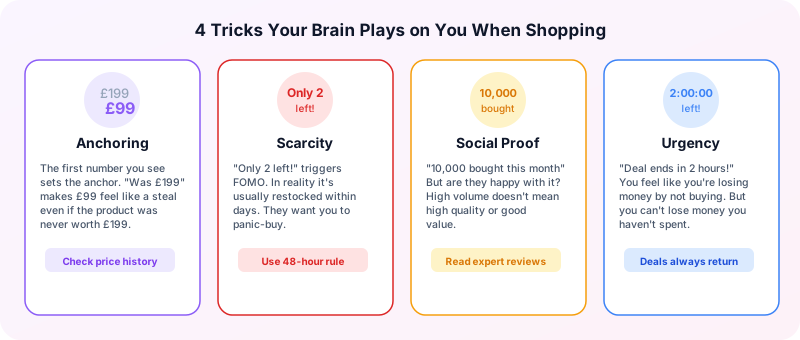
The antidote to all of these is data. When you can see the real price history, the anchoring effect dissolves. When you know the product will be this price again next month, the fake urgency disappears. Price trackers aren’t just convenient — they’re a psychological defence mechanism.
The deal-hoarding trap (and how to avoid it)
Real talk: there’s a dark side to becoming good at finding deals. It’s called deal-hoarding, and if you spend time on HotUKDeals or r/deals, you’ve probably seen it (or done it).
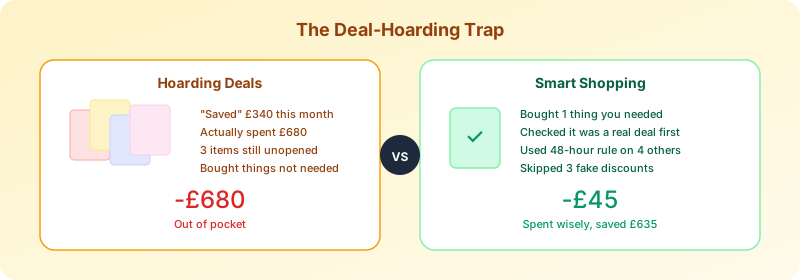
It goes like this: you start finding amazing deals, you get that little dopamine hit from each one, and before you know it you’re buying things “because the deal was too good to pass up” — not because you actually wanted them.
Some warning signs:
- You’ve got unopened products from previous sales sitting in a drawer
- You feel anxious when a deal is about to expire — even for stuff you weren’t looking for
- You measure success by how much you “saved” rather than how much you spent
- Your total spending has actually gone up since you got into deal-hunting
If any of that sounds familiar, try the 48-hour rule: for any purchase over £50 that you didn’t plan before seeing the deal, wait 48 hours. If you still want it and the deal is still available, go for it. If the deal expires — that’s fine. Price history shows these things always come back around.
When things actually get cheap (the seasonal cheat sheet)
Every product category has a predictable price cycle. If you’re not in a rush, timing your purchase around these windows can save you 20-40% without hunting for deals at all.
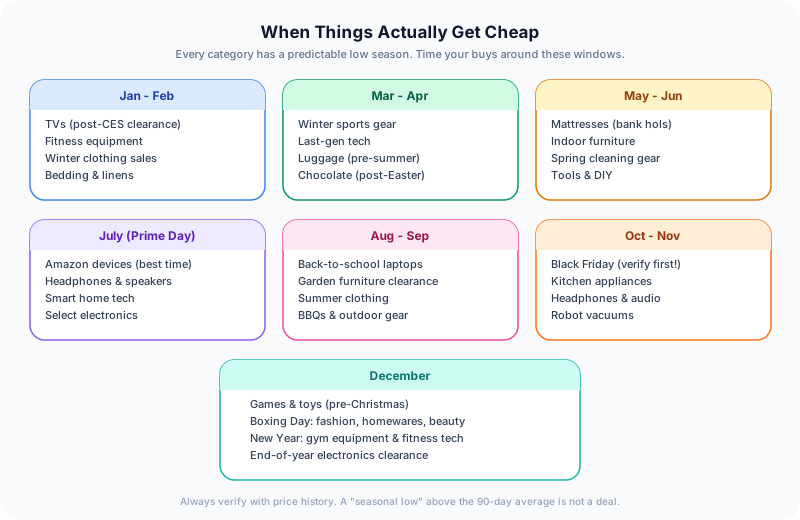
A heads up though: these are general patterns. Always check the actual price history before buying. A “seasonal low” that’s still above the 90-day average isn’t really a deal — it’s just marketing that happens to coincide with a predictable date.
The tools we actually use (and recommend)
There are hundreds of “deal sites” out there, and honestly most of them are just affiliate farms dressed up as advice. Here are the ones that genuinely help — the tools we use ourselves, organised by what they’re actually good for.
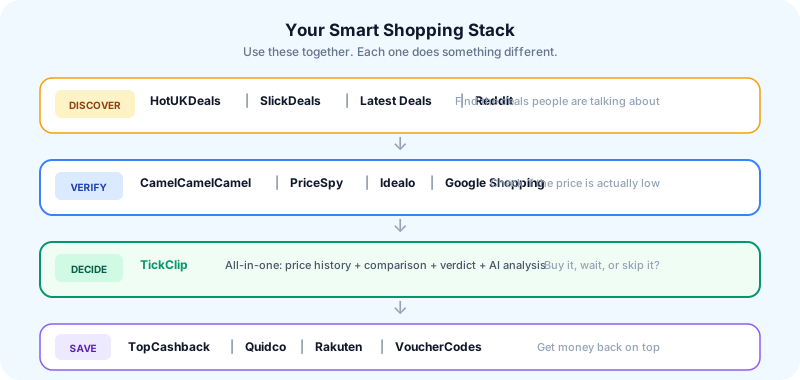
Price trackers — see the real numbers
Amazon-specific price tracking with email alerts. Brilliant for watching a product over time and buying when it dips. Set a target price and forget about it.
Best for: Amazon price alertsMulti-retailer price comparison with historical charts and store ratings. Covers a wide range of UK shops, not just Amazon.
Best for: UK multi-store comparisonEuropean price comparison engine. Great coverage for electronics, appliances, and fashion across UK and EU retailers.
Best for: UK + EU electronicsCast the widest net. Not the deepest data, but covers more retailers than anyone. Good starting point for any comparison.
Best for: Quick broad comparisonDeal communities — where real people share real finds
These are community-driven. Real shoppers posting deals they’ve found, voted on by thousands of others. The crowd filters out the rubbish so you don’t have to.
The gold standard for UK deals. Community-voted, well-moderated, and absolutely massive. If a deal is genuinely good, it’ll be “hot” here.
Best for: UK deal discoveryThe American equivalent of HUKD. Strong voting system, good community. Check this if you’re buying from US retailers or anything that ships internationally.
Best for: US deal discoveryBroader UK deal coverage including groceries, fashion, and travel. More casual vibe than HUKD. Good for everyday household stuff.
Best for: Everyday UK dealsIf you’re buying tech, this subreddit is incredible. Knowledgeable community that genuinely understands pricing cycles for components and peripherals.
Best for: Tech & electronicsFacebook groups & pages — social deal-hunting done right
Some of the best deals never make it to the big deal sites — they pop up in Facebook groups first. The trick is knowing which groups are actually useful (most are spam). Here are the ones worth joining:
Curated deal finds posted daily — electronics, home, fashion, and more. No spam, just deals worth looking at. Give it a follow.
Follow the pageActive community sharing deals, asking for price checks, and warning each other about fake discounts. Great for real-time deal alerts and discussion.
Join the groupOne of the largest UK deal groups on Facebook. Mix of online and in-store finds. Particularly good for supermarket and high street deals.
UK Facebook groupFor the serious deal hunters. Tips on stacking coupons, cashback, and offers to get maximum savings. Some incredible finds in here.
UK couponing communityA word of caution on social media deals: Facebook Marketplace and random “deal pages” are full of scams. Stick to established groups with active moderation and a community that calls out fake deals. And always run any deal through a price checker before buying — just because someone on Facebook says it’s a bargain doesn’t make it one.
Cashback — free money you’re probably leaving on the table
This takes 10 seconds before checkout and earns you 2-10% back on stuff you’d buy anyway. Genuinely no downside.
Usually has the highest cashback rates in the UK. Check this first before any online purchase. Seriously, just make it a habit.
Best for: UK cashbackThe other big UK cashback player. Sometimes beats TopCashback on specific retailers. Worth having both bookmarked and comparing.
Best for: UK cashback alternativeThe US cashback leader. Pairs well with credit card rewards for maximum stacking. Browser extension makes it automatic.
Best for: US cashbackDiscount codes and vouchers. Always worth a 30-second search before hitting “pay.” You’d be amazed how often there’s a working code.
Best for: Checkout discount codesExpert reviews — know what you’re buying
A cheap price on a rubbish product is still a waste of money. Check what independent reviewers say before buying — not the retailer’s own cherry-picked five-star reviews.
Independent UK product testing. Paid membership but properly unbiased. They buy products anonymously and test in their own labs.
Best for: UK product testingData-driven reviews with objective measurements. Hands down the best resource for TVs, monitors, headphones, and soundbars.
Best for: A/V & tech reviewsThorough “best of” guides. Good starting point when you don’t even know what model to look at. They do the research so you don’t have to.
Best for: Category researchSearch “[product name] review” for hands-on real-world opinions. Nothing beats actually seeing someone use the thing for six months.
Best for: Real-world hands-onAnd then there’s TickClip — the all-in-one decision engine
TickClip — Buy or Skip in Seconds
All those tools above are brilliant — but they each do one thing. TickClip combines them. Paste any Amazon link or product name and you get:
- 12-month price history — is today’s price actually low?
- Cross-retailer comparison — who else sells it and for how much?
- A clear TICK / CLIP / SKIP verdict — scored 0-100 based on data
- Manipulation detection — was the price hiked before this “sale”?
- AI-powered analysis — expert reviews, deal signals, and plain-English explanation
It’s free, no sign-up required, and gives you the answer in under 5 seconds. We built it because we got tired of doing all these checks manually.
Try It Free — No Sign-Up NeededHow the TickClip engine works under the hood
We’re big on transparency. If a tool is going to tell you whether to spend your money, you should know exactly how it’s making that call. So here’s the full breakdown — no black box, no “proprietary magic.” Just math.
We pull 12 months of real pricing data from Keepa — the gold standard for Amazon price tracking, with over 10 years of data updated multiple times daily. From this we extract: current price, 90-day average, 52-week low, 52-week high, and a volatility score (how much the price bounces around).
This is the core of TickClip. Every product starts at a baseline score of 50 out of 100, then we adjust it across five dimensions:
The final score is clamped between 0 and 100, then mapped to a verdict:
After the verdict, we fire off the heavy-lifting phase: Google Shopping comparison across real retailers with verified URLs, expert review aggregation, deal-site scanning, and AI-powered manipulation detection. This layer answers the questions: “Where else can I buy it cheaper?” and “Is this seller trying to trick me?”
Finally, our AI reads all the data and writes a casual, honest explanation of what’s going on — why the price is good (or not), what to watch out for, and what to do next. Think of it as having a knowledgeable friend who’s already done all the research for you.
Everything loads progressively — you see the verdict within 2 seconds, and the deeper analysis fills in over the next few seconds. No waiting, no page reloads, no staring at spinner icons.
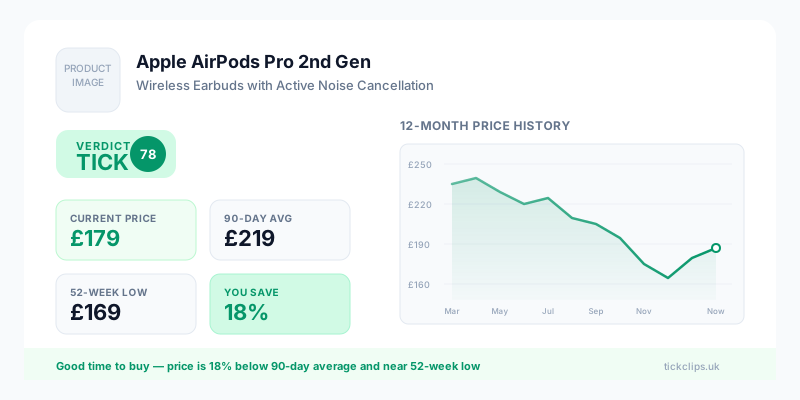
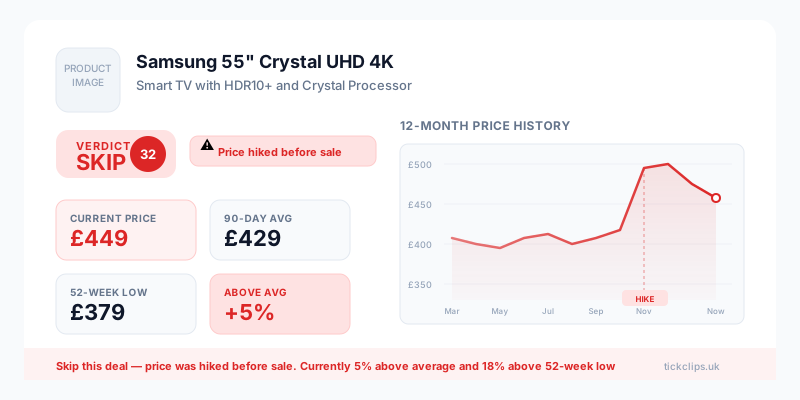
Here’s what it looks like in action
Two real examples showing the engine at work — one that’s a genuine deal and one that’s not:
Understanding the three verdicts
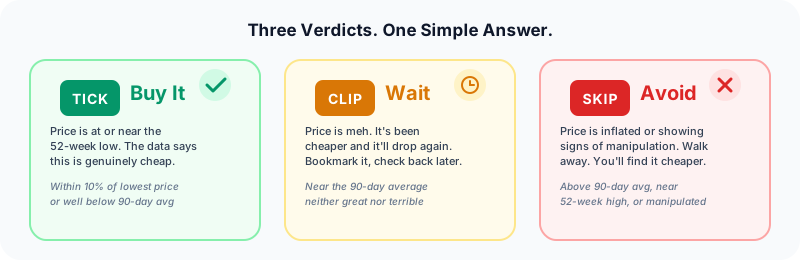
Important note: the verdict is a recommendation, not a command. If you need the product urgently and the price is reasonable (even if not at its absolute lowest), buying it makes sense. We give you the data — you make the call.
Quick answers to common questions
Is TickClip free?
Yes, completely. No account, no login, no hidden fees, no “premium tier” upsell. Just paste a link and get your verdict.
What products does it work with?
Amazon UK and Amazon US products — by link, product name, or ASIN. We cross-reference prices across other retailers automatically. More marketplaces are on the way.
Where does the price data come from?
Price history comes from Keepa — the industry-standard Amazon price tracker with over 10 years of data. It’s updated multiple times per day across all Amazon marketplaces.
Can I trust the AI analysis?
The verdict comes from our pricing algorithm, not the AI. The AI explains the verdict in plain English, detects manipulation patterns, and answers product questions. Data drives the decision; AI explains it.
How is this different from other deal sites?
Most deal sites earn affiliate commission — their incentive is to tell you everything is a great deal. We take the opposite approach: if a deal isn’t worth it, we’ll tell you to skip it. We’d rather you save money than buy something you’ll regret.
The bottom line
Every purchase is a financial decision. “Is this deal worth it?” isn’t a complicated question — but it deserves an answer backed by data. Not by a retailer’s marketing, not by a gut feeling, and definitely not by a countdown timer that’s been “about to expire” for the last three weeks.
The tools exist. The price history is available. The manipulation patterns are detectable. All you need is 60 seconds and the habit of asking the question.
Start with the 5-point check. Bookmark the tools above. And next time you see a fat red “SALE” badge, smile — because now you know how to tell if it’s real.
Ready to check a deal right now?
Paste any Amazon link or product name. Get a verdict in seconds.
Try TickClip Free — No Sign-Up